Above the Fire, Below the Radar: The Case for a Proper Mantelpiece Arrangement
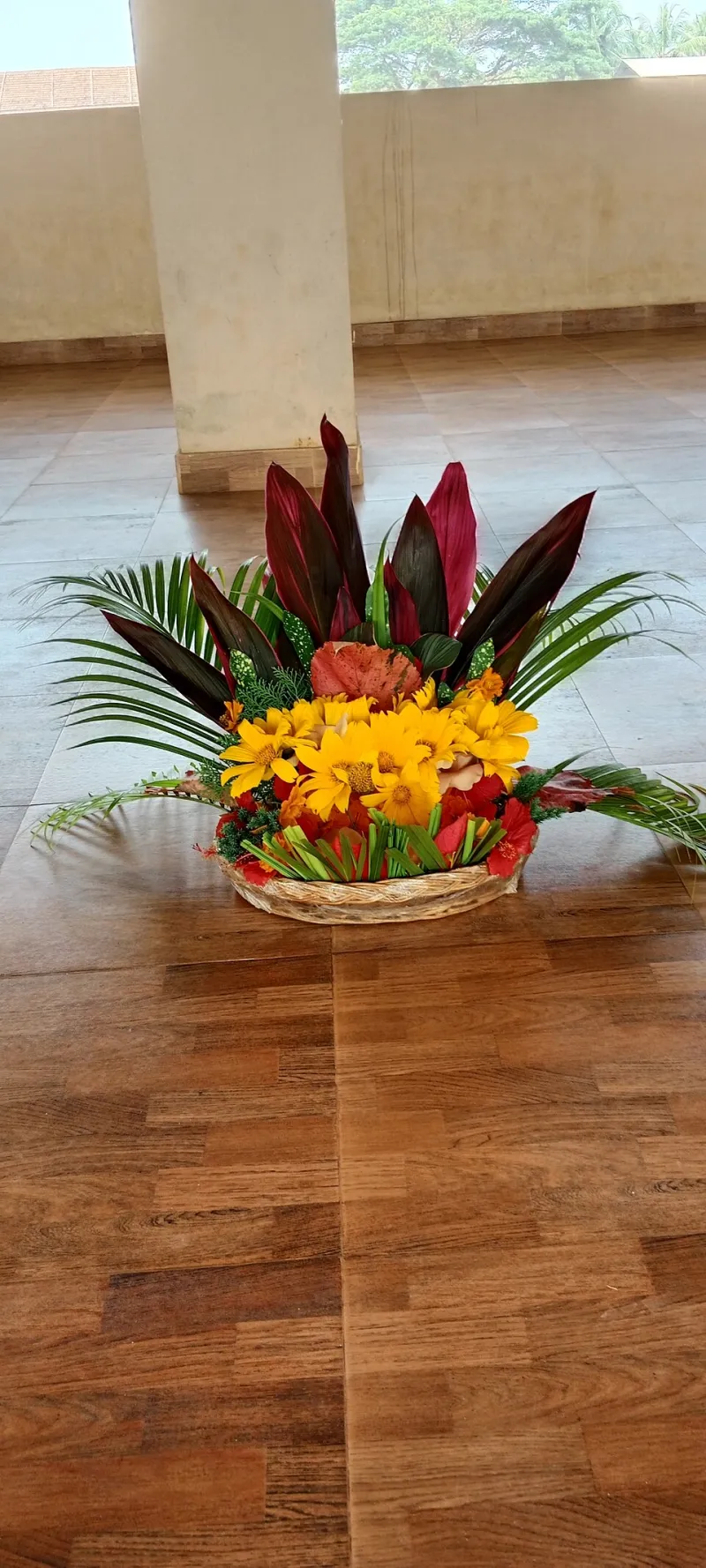
Photo: VinetVas17, CC BY-SA 4.0, via Wikimedia Commons
Let's be honest about where the flowers go in a British home. Nine times out of ten, they end up in the middle of the dining table — a spot that, if we're truthful, gets admired properly about twice a month when someone comes round for a roast.
The mantelpiece, meanwhile, sits there above the fire doing nothing. And it shouldn't, because it's arguably the best seat in the house. It's at eye level when you're sat down. It catches the lamplight in the evening. It's the first thing visitors clock when they walk in and clock the telly's off. We'd go as far as saying it's the most criminally underused arrangement spot in Britain, and we've decided, in the mild, polite way that we decide things here, that this ought to change.
Why the hearth beats the table
A table arrangement has to fight for space between the gravy boat and somebody's phone. It gets shuffled, knocked, and eventually shoved to one side to make room for the cheeseboard.
A mantelpiece arrangement, by contrast, is out of harm's way. Nobody's leaning over it. It sits against a wall, which means you only need to make it look good from the front — a mercy for beginners, and a genuine design advantage for everyone else. And because it's raised up, even a modest fistful of stems reads as generous.
There's also the matter of the fireplace itself. It's the heart of the room — literally, in most older houses, the structural reason the room exists. Dressing it is a small act of respect.
The golden rules of hearth arranging
Before you start snipping, a few ground rules from the workshop:
Keep it low and wide, not tall. Height is the enemy here. Anything over about 30cm starts to look like it's escaping up the chimney. You want a low, horizontal sweep — think of it as a scarf laid along the shelf rather than a lighthouse.
Break the symmetry. The instinct is to plonk a vase dead centre, flanked by the clock and a photo of the grandchildren. Resist. Off-centre is far more interesting. Push your arrangement two-thirds of the way along the shelf and let the negative space do some work.
Mind the fire. This one's non-negotiable. If you've got an open flame, keep all material — dried or fresh — at least 60cm from the flue opening, and never let anything dangle over the edge. Dried flowers are tinder. If your fire gets regular use in winter, either use a large, deep container well to one side, or save the dried stuff for summer and use fresh, moisture-rich stems in the cold months.
Weight matters. A heavy ceramic jug or an old stoneware jar anchors the whole thing. A wobbly vase on a mantel is a Sunday-night disaster waiting to happen.
The under-a-fiver shopping list, season by season
Here's the part that makes people sit up: you can do this properly, all year round, for pocket change.
Spring (March–May): A fiver at the supermarket gets you a bunch of daffodils with change to spare — split them low along the shelf with a bit of foraged hazel or curly willow for structure. Later, cow parsley from the lane (ask the landowner, mind) makes a frothy, free sweep.
Summer (June–August): Sweet peas from a PYO patch or a neighbour's allotment, plus whatever's in the bargain bucket at the garden centre — alstroemeria is the unsung hero of the cheap arrangement and lasts a fortnight.
Autumn (September–November): This is the mantel's season. Rosehips, seed heads, faded hydrangea heads from the garden, a few branches of turning acer. Cost: a walk and a pair of snips.
Winter (December–February): Borrowed holly from a friendly farmer, ivy trails, and the last of the garden's honesty seed pods. A single bunch of supermarket paperwhites split across the shelf will scent the whole room.
The container question
You don't need to buy anything. An old jug, a jam jar wrapped in twine, a battered tin from the shed — the mantelpiece tolerates (nay, encourages) a bit of rustic. If you want to get clever, chicken wire scrunched into a wide-mouthed vessel holds low stems exactly where you want them, which is the same trick we teach on our foam-free courses.
Start this weekend
Go and look at your mantelpiece. Really look at it. Then take one bunch of whatever's cheap and cheerful at the shop, cut it all in half, lay it low and lopsided along the shelf, and step back.
That's the manifesto, really. The hearth has been doing the heavy lifting in British homes for centuries. The least we can do is give it some flowers.