Kettles On at Eight: The Honest Hour-by-Hour Diary of a Workshop Day
Photo: Gr4yleaf, CC BY-SA 4.0, via Wikimedia Commons
Booking a workshop is a bit like booking a haircut at a new salon — you know roughly what you're in for, but the details keep you up the night before. Will you be the worst one there? Do you need to bring anything? Is there a dress code for handling thistles?
Having now run (and occasionally taught) more workshop days than we can shake a snip stick at, we thought it was time to pull back the polytunnel door and show you exactly how one unfolds. No airbrushing. Yes, there will be tea. Quite a lot of it.
8:00am — Buckets Before Students
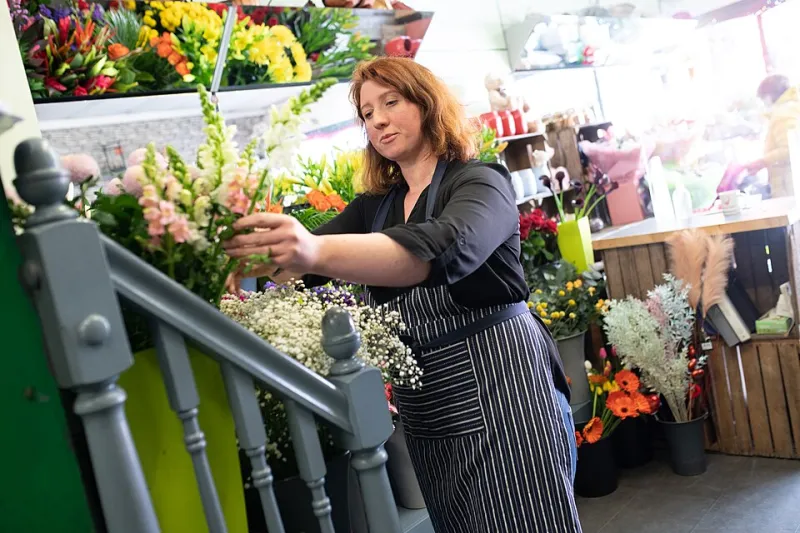
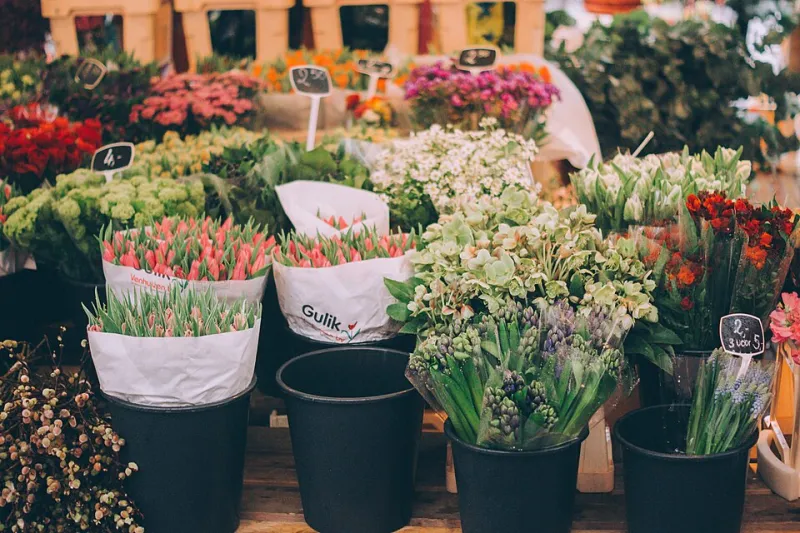
Long before anyone arrives, the day starts with conditioning. Stems go into deep, lukewarm water, buckets get sorted by colour and texture, and the room fills with that green, sap-smelling tang of fresh-cut British blooms. Everything you'll play with today was probably in the ground a day or two ago — the dahlia was still attached to its plant yesterday afternoon, which is the sort of thing that makes supermarket bouquets feel a bit like a museum exhibit.
The kettle goes on around now, too. Priorities.
9:30am — Wellies at the Door
Students trickle in — a mix of the nervous first-timers, the birthday-party bookings, and the one person who's clearly been watching arranging videos at 1am for months. Coffee is poured, names are swapped, and there's always a brief, polite negotiation over who sits nearest the flower buckets. (Everyone wants to sit nearest the buckets.)
We start with a wander through what's in season. Right now that might mean cosmos so floppy you think they've died (they haven't), ammi that looks like a cloud on a stick, and seedheads you'd normally deadhead without a second thought.
10:15am — The Demonstration
This is where the tutor shows how it's done: spiralling stems in the hand, building shape from the foliage up, knowing when to stop. There's a running commentary — why that rose sits lower, why you should turn the arrangement as you go, why nobody ever truly trusts chicken wire until they've used it once.
Someone always gasps. It's lovely.
11:00am — Hands On, Sleeves Up
Then it's your turn. This hour is the heart of the day: choosing stems, second-guessing, being gently talked out of cramming everything into the middle. The tutor floats about, offering quiet rescues and the occasional "ooh, leave that bit, it's doing something interesting."
Nobody's arrangement looks like anyone else's. That's rather the point.
12:30pm — Lunch (and a Proper Sit Down)
A spread — usually involving a quiche, a decent loaf and something with a crumble — plus a garden wander if the weather's behaving. This is where the real questions come out: "Could I actually grow these myself?" (Yes.) "Is it too late to change careers?" (Almost certainly not.)
1:30pm — Round Two
The afternoon session switches discipline — perhaps a hand-tied bouquet after the morning's vase work, or a seasonal wreath base that requires more strength in your thumbs than you expected. Hands get sticky, sap gets under nails, and at least one person discovers that foliage is arguably more beautiful than the flowers.
3:45pm — The Reluctant Goodbye
And then the slightly awkward bit: home time. Students circle their own arrangements like proud parents, photograph them from eleven angles, and have to be gently reminded that the workshop finishes at four, not whenever the light stops being nice.
Blooms get wrapped, care instructions get issued (change the water, trim the stems, don't put it by the radiator), and everyone leaves clutching something they made with their own hands that morning.
So, Should You Book?
If you've been hovering over the booking button: come. Bring an apron if you like, wear shoes you don't mind getting a bit muddy, and leave your inner critic at the gate. The flowers are better company than you'd think — and by four o'clock, so is everyone in the room.