Bucket Economics: What £12 at the Flower Market Taught Me About Arranging Like a Professional
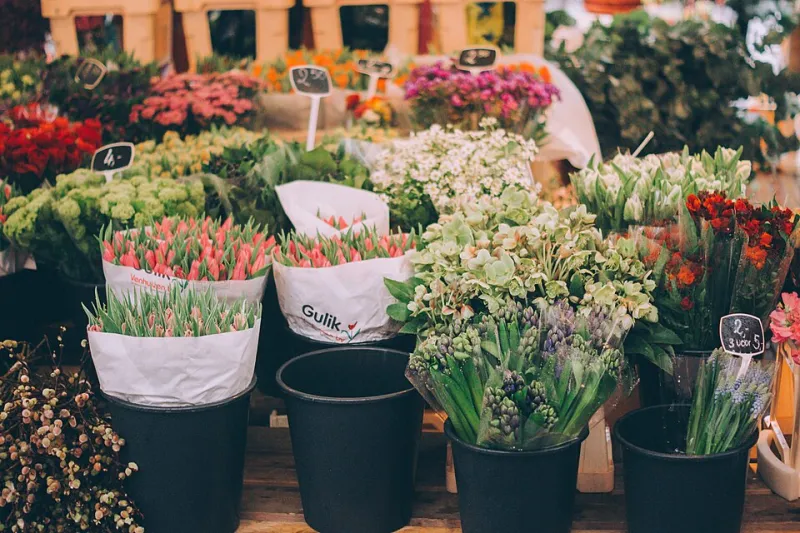
Photo: Alisa Anton alisaanton, CC0, via Wikimedia Commons
Here's a confession from the floristry world: the most beautiful arrangements are rarely made from the most expensive flowers. They're made from good buying. So we set ourselves a challenge — take £12 to a proper British flower market (New Covent Garden on a Tuesday, if you're wondering), fill one bucket, and make it last a working week of arrangements at home.
Rules: no supermarket bunches, no raiding the garden, and the bucket had to earn its keep from Monday to Sunday.
Tuesday, 6am: Buying by Colour, Not by Label
The first thing a florist does that a hobbyist doesn't: shop the palette, not the variety list. Amateurs arrive looking for peonies. Professionals arrive looking for a mood — in our case, a moody autumnal mix of rusts, plums and faded rose.
For our £12, this meant: two bunches of chrysanthemum in a burnt caramel (yes, really — more on that in a moment), a bunch of deep red hypericum berries, pale statice, a few stems of rusty leucospermum marked down because they were on the turn (they weren't; they were just characterful), and a generous armful of eucalyptus and pittosporum from the foliage stand. Total: £11.50. Change for the coffee.
The trick with foliage: buy it by weight and generosity. Foliage is what makes five stems look like twenty. It's also the cheapest thing at the market and the thing that makes the whole bucket cohere.
The Conditioning Hour Nobody Skips
Back home, the bucket gets its spa treatment, and this is where florists quietly out-arrange everyone else. Every stem: strip foliage below the waterline, recut at a sharp angle with a proper pair of snips, and plunge into deep, cool water. The chrysanthemums went into shallow water — they drink through the stem and shallow water suits them. The woody eucalyptus got a cross-cut and a smash with the handle of the snips. Two hours in a cool, dark hallway before anything touched a vase.
This hour is the difference between arrangements that last three days and arrangements that last ten. It is not optional.
Seven Days, Seven Vases
Days one–two: the big statement. A generous, loose arrangement in the widest vase — foliage first, angled like a tripod, then the chrysanths low and clustered, berries threaded through. The mistake hobbyists make is spreading everything evenly; cluster, and let some things sit lower than feel "correct."
Days three–four: strip the best stems into two small bud vases — one for the loo, one for the kitchen windowsill. Statice and a single leucospermum each. Cost per vase: pennies.
Days five–six: the chrysanths, honestly past their first flush, get beheaded and laid face-down on a tray to dry. Meanwhile the eucalyptus, which has barely noticed the week's events, moves into a third vase with the hypericum, now wrinkled and rather beautiful, like raisins in jewel tones.
Day seven: the dried chrysanthemum heads go into a small jam jar with the last of the statice, now also drying beautifully. A permanent little arrangement that cost about £2.
What Changed Permanently
Three habits stuck. First: buy foliage generously and flowers sparingly. Second: condition everything, always, before it goes near a vase. Third: plan for the afterlife — a bucket bought with drying in mind gives you two arrangements for one purchase.
And the chrysanthemums? We've fully changed our tune. A caramel-brown chrysanth, properly conditioned and clustered with berries and good foliage, looks like something out of a Dutch still life. Twelve pounds, one bucket, and a small permanent shift in how we see the flower market — that's the florist's habit worth stealing.