Five Days in Wellies: The Honest Diary of a Would-Be Florist Going Pro
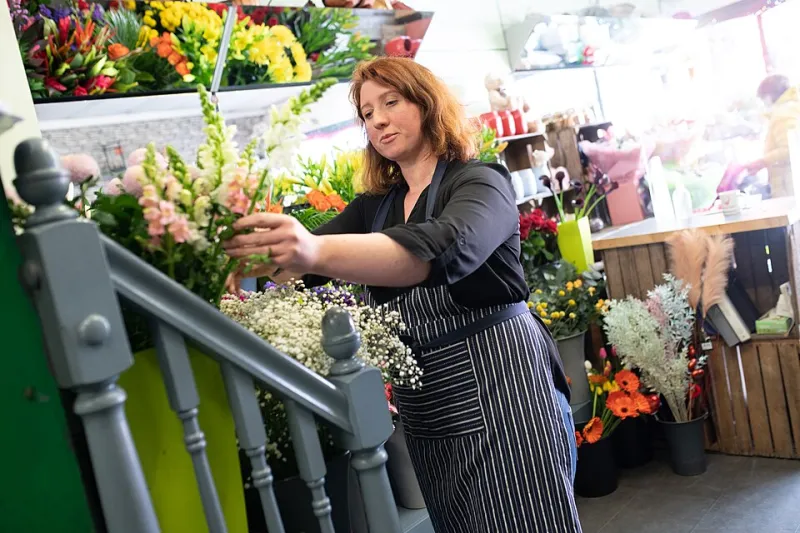
Photo: direct2Florist, CC BY 2.0, via Wikimedia Commons
There's a moment — usually somewhere between the third Conditioning 101 workshop and the fourth 'you've got a real eye for this, love' — when every hobbyist arranger starts doing the maths. Could I? Should I? Would people actually pay me?
It's the question we get asked more than any other at the School, and honestly, the answer is never a simple yes or no. So when former student Priya asked if she could shadow a proper working week at Hollow Meadow Flowers, a one-woman studio tucked behind a sheep field outside Ludlow, we sent her with a notebook and instructions to write down everything. Including the boring bits.
Especially the boring bits.
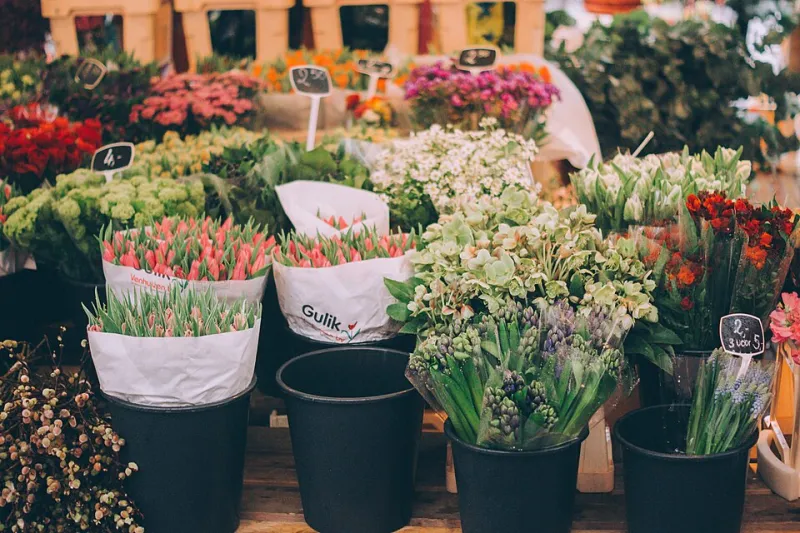
Tuesday, 5:40am: The Market Isn't Romantic
The week starts in the dark. Hollow Meadow's owner, Cath, runs a mixed model — about sixty per cent of her stems come from her own patch and two local growers, but she tops up at the wholesale market, and that means alarms that would make a dairy farmer wince.
'Everyone pictures the arranging,' Cath says, steering the van through fog on the A49. 'Nobody pictures this.'
Priya's notebook from that morning reads like a lesson in itself: buy with the bucket in mind, not the brief. If it won't condition by Thursday, don't buy it for a Friday wedding. The market run took two hours and cost more than Priya's entire monthly flower budget at home. Cath haggled over a bundle of berried hawthorn without apology. 'Being shy about money is a hobbyist habit. Professionals can't afford it.'
The Buckets Are the Business
Back at the studio, the real work begins, and it is not arranging. It's stripping foliage, re-cutting stems at an angle, filling galvanised buckets, and labelling everything in Cath's tight little handwriting. Three hours of conditioning before a single stem goes anywhere near a vase.
Priya had assumed her workshop skills would transfer straight over. They didn't — not at speed, anyway. 'At the School, we'd spend a morning on one hand-tied bouquet,' she wrote. 'Cath made four before lunch, each one different, each one to a brief she'd been given over the phone in eleven seconds.'
This is the gap between hobbyist and professional that no one mentions: it's not taste. It's throughput.
Wednesday: The Part Where You Talk to Humans
Midweek brought two client consultations — a couple planning a September wedding at a barn up the road, and a regular who orders flowers for her mother's care home every fortnight.
The wedding couple wanted 'wild, but tidy'. Cath translated this in real time, sketching, quoting prices, managing expectations about what's actually in season. Priya watched her say no twice — to peonies in September and to an arch that the budget wouldn't stretch to — and say no kindly, with alternatives attached.
'That,' Cath said afterwards, 'is the actual job. The flowers are the easy bit.'
Priya's note: People aren't buying flowers. They're buying the version of the day they've got in their head. Your job is to price that kindly and honestly.
Thursday: The Spreadsheet of Doom
Nobody writes articles about Thursday. Thursday was invoices, a supplier complaint email (dahlias arrived heat-stressed), a social media post Cath squeezed in between jobs, and a long, honest conversation about money.
The numbers, roughly: Cath clears a modest but real living, works six days a week April through September, and does her own bookkeeping at the kitchen table. She hasn't had a summer holiday in four years. She also hasn't bought a supermarket bouquet since 2019, and she wouldn't swap — but she wanted Priya to know the trade. 'Half my friends think I play with flowers all day. The other half think I'm mad for doing it alone.'
Friday: The Wedding, and the Verdict
The week ended with a small wedding at a village church — meadow jugs on the windowsills, a hand-tied bouquet, a foam-free arch Cath built in ninety minutes flat. It was, genuinely, beautiful. It was also 10pm before the van was unloaded and the buckets were sterilised.
So should you turn pro? Here's the honest takeaway list Priya came home with:
- Do it for the work, not the image. The apron-and-market-trug life is about ten per cent of it.
- Learn the boring skills first. Conditioning, pricing, quoting, saying no.
- Start small and paid. One weekly order for a local café teaches you more than another workshop.
- Mind the seasonality cliff. Winter is lean. Plan for it or be surprised by it.
- Community over competition. Cath survives because she trades stems, advice and wedding referrals with three nearby growers.
Priya's final diary entry: I still want to do it. But now I want to do it with my eyes open, and that's worth more than any bouquet.
That, we'd say, is a week well spent.