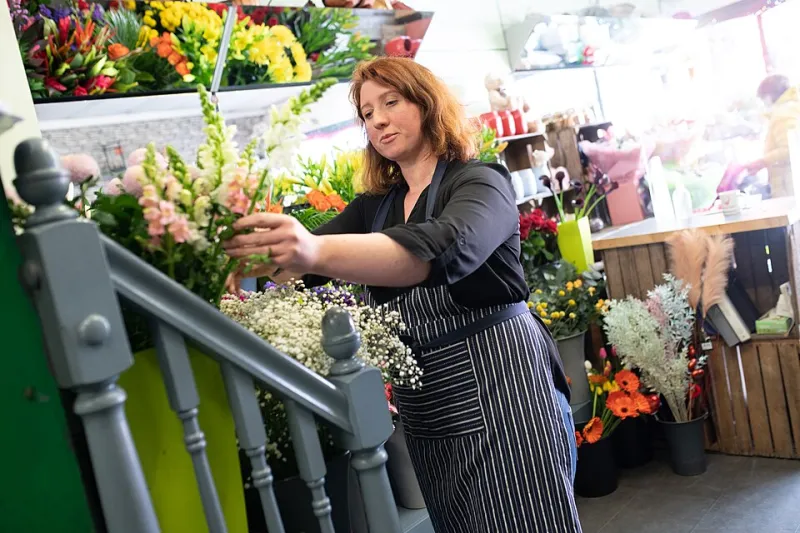
Brass, Bunches and Battered Hymn Books: Lessons From the Church Flower Rota
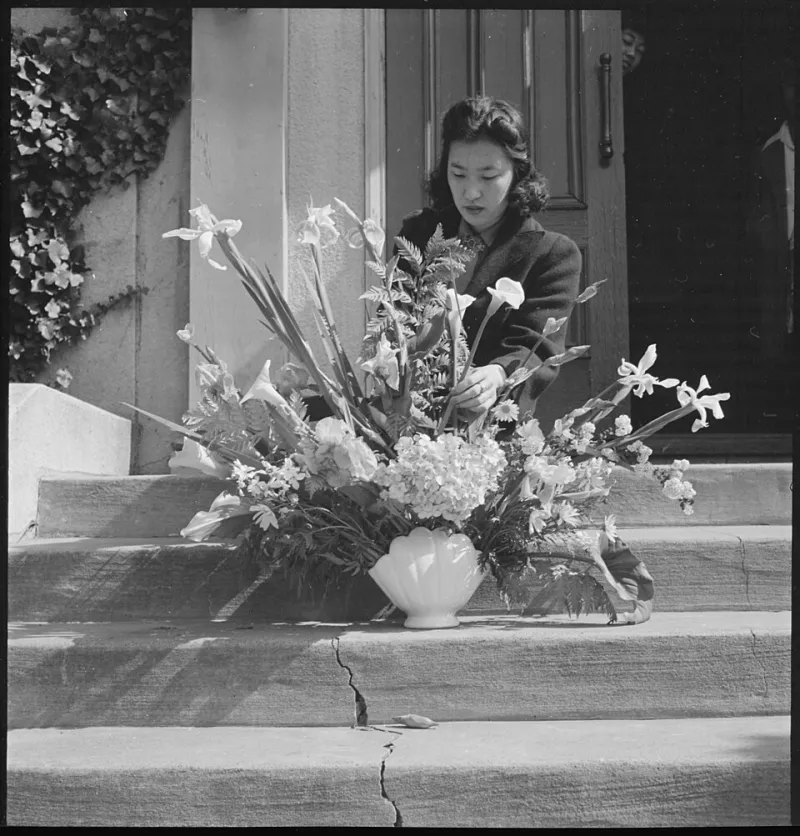
Photo: Dorothea Lange, Public domain, via Wikimedia Commons
There is a particular smell to a church vestry on a Friday evening: damp stone, brass polish, and a bucket of chrysanthemums that someone's nephew grew 'for the church, like'. It is, we'd argue, the true birthplace of British floral design — long before anyone had a hashtag for it.
We spent a recent evening with three women who have, between them, put flowers on the altar of a small Nottinghamshire parish for over a century. Their combined wisdom, freely given over tea and a packet of custard creams, would put most modern workshops to shame.
The Rota Is a Curriculum
The church flower rota is the most rigorous floristry training programme in the country, and it's completely free. Twelve months a year, someone is on duty. No season is skipped. No excuses. If your wedding flowers only ever feature June peonies, you have never really been tested. The rota lady arranging for the second Sunday in January has been tested, and she has opinions about gypsophila.
Doreen, who joined the rota in 1974, puts it plainly: "You learn to work with what there is. There's always something. Even in the bleakest fortnight of February, there's something." (This is, incidentally, the entire philosophy of our school, arrived at independently by every village in Britain.)
The Brass Vase Rules
Every parish has its fleet of brass vases, and every parish has rules about them. These are not arbitrary. They are hard-won engineering knowledge.
- Chicken wire came first. Ball up a piece of chicken wire, push it into the vase neck, and you have a foam-free mechanics system that predates floral foam by decades. Trendy? Only if you think 1930s is trendy.
- Tape a grid over wide mouths. A strip of waterproof tape across the top of a bowl, crossed into a grid, holds stems exactly where you put them. Doreen uses the tape from the first-aid box. It works.
- Conditioning isn't optional. Stems go into deep cool water for several hours before arranging — cut at an angle, lower leaves stripped. "We never arranged on the same day as cutting," says Margaret. "That's just waste."
- Fill the water, not the space. Church arrangements are judged on Sunday morning by every pair of eyes in the pews, and they last through the week. Deep water, generous vase, fewer stems, longer life.
Friday Night Prep Is a Ritual Worth Stealing
The modern arranger tends to assemble. The rota lady prepares. Flowers are stripped, cut, conditioned and sorted by height into buckets the night before. The actual arranging — done early, in a cold church, often before a service — takes twenty minutes because everything else was already done.
This is the single best habit we could teach our workshop students: separate the prep from the design. Your arrangements will improve immediately, whatever the occasion.
What the Rota Knows About Restraint
Here is the quiet genius of church flowers: they are arranged to be seen from a distance, in a large cool building, for a week. That means strong silhouettes, big focal points, and a proper understanding of how white lilies glow in stained-glass light. Scale matters. Every stem has a job.
Compare that to the Instagram arrangement — tight, dense, photographed from above, dead in four days. We know which tradition we'd back.
Passing It On
The rota ladies we met are, characteristically, worried about who comes next. Their average age is seventy-something and the list of names on the kitchen rota chart is short.
So here's our pitch: find your nearest church, chapel or village hall with flowers in it. Offer a Friday evening. You will learn mechanics you can't buy in a kit, conditioning discipline, and a proper respect for the humble chrysanthemum. You might also be handed a cup of tea, a brass vase, and sixty years of knowledge that no algorithm can replicate.
Bring your own snips. Wear something you can kneel in. And for goodness' sake, condition your stems the night before.