The Year-Round Arranger: Twenty Blooms to Master Before You Call Yourself a Flower Person

Photo: Basher Eyre , CC BY-SA 2.0, via Wikimedia Commons
Every term we meet the same student: talented, enthusiastic, and convinced that flowers simply stop existing in November. They don't — you've just been looking in the wrong places. Our answer is the starter syllabus: five blooms per season, each one a proper lesson in itself. Master these twenty and you'll be able to fill a vase from the garden, the hedgerow or the market all year round.
Spring
Daffodils. The great British spring workhorse. Condition them separately for 24 hours — their sap is toxic to other flowers and will shorten everything else's life. Arrangement to attempt: a loose crowd of daffs in a low bowl, stems supported by chicken wire. Classic beginner mistake: mixing them straight into a posy with tulips and wondering why everything flops by Tuesday.
Tulips. They keep growing in the vase, sometimes several centimetres. Condition in deep cold water, wrapped upright to straighten the stems. Try a simple hand-tie with hellebores. Mistake: cutting stems too short — tulips love a deep vase.
Hellebores. Gorgeous, moody, and notorious for wilting. The trick: cut mature blooms and scald the stem ends in just-boiled water for 20 seconds. Float the heads in a shallow dish if all else fails. Mistake: cutting immature flowers that were never going to hold.
Muscari. Cheap, cheerful and beautifully scented. Condition as normal and cluster them at the edge of a posy. Mistake: burying them in the middle where nobody can see or smell them.
Flowering currant. A forager's spring gift, free from the hedgerow. Strip lower leaves, crush the woody stem ends. It makes a wonderful airy framework. Mistake: not cutting enough — a single skinny sprig looks apologetic.
Summer
Sweet peas. Cut every few days, condition overnight in deep water, and use them lavishly. A jar of sweet peas on a kitchen table is peak July. Mistake: letting them go to seed — keep cutting and they keep giving.
Dahlias. Cut when fully open (they don't open further in the vase), plunge stem ends into hot water for an hour. Try a dahlia-dense table posy with mint. Mistake: cutting half-open buds and waiting for a show that never comes.
Cosmos. The best lesson in negative space. Condition overnight and let them sprawl above something structured. Mistake: cramming them in tight — cosmos wants air.
Ammi. The florist's favourite filler. Condition like most hardy annuals and use it to soften anything. Mistake: using it as an afterthought rather than the star of a wild, meadowy arrangement.
Hydrangea. Cut mature heads, split the stem ends up an inch, and submerge the whole flower head in water for an hour. Mistake: cutting young heads in a heatwave and watching them dissolve.
Autumn
Chrysanthemums. Maligned by supermarket trauma, but a proper British spray chrysanth is generous, long-lasting and gorgeous in russet tones. Mistake: buying the tightly-wrapped imports instead of the good stuff from a grower.
Michaelmas daisies. Aster-time colour when little else bothers. Condition in cool water, use in loose clusters. Mistake: deadheading too late — cut them at their peak.
Rosehips. Free, if you know your hips from your haws. Condition woody stems by splitting the ends. Mistake: foraging from roadsides or private land without asking.
Grasses and seedheads. Pennisetum, teasels, honesty. Condition by hanging to dry or using fresh. Mistake: overloading — three grasses say 'autumn', twenty say 'hay bale'.
Dahlias again, if you're greedy. They'll keep until the first frost. Treat them like a countdown.
Winter
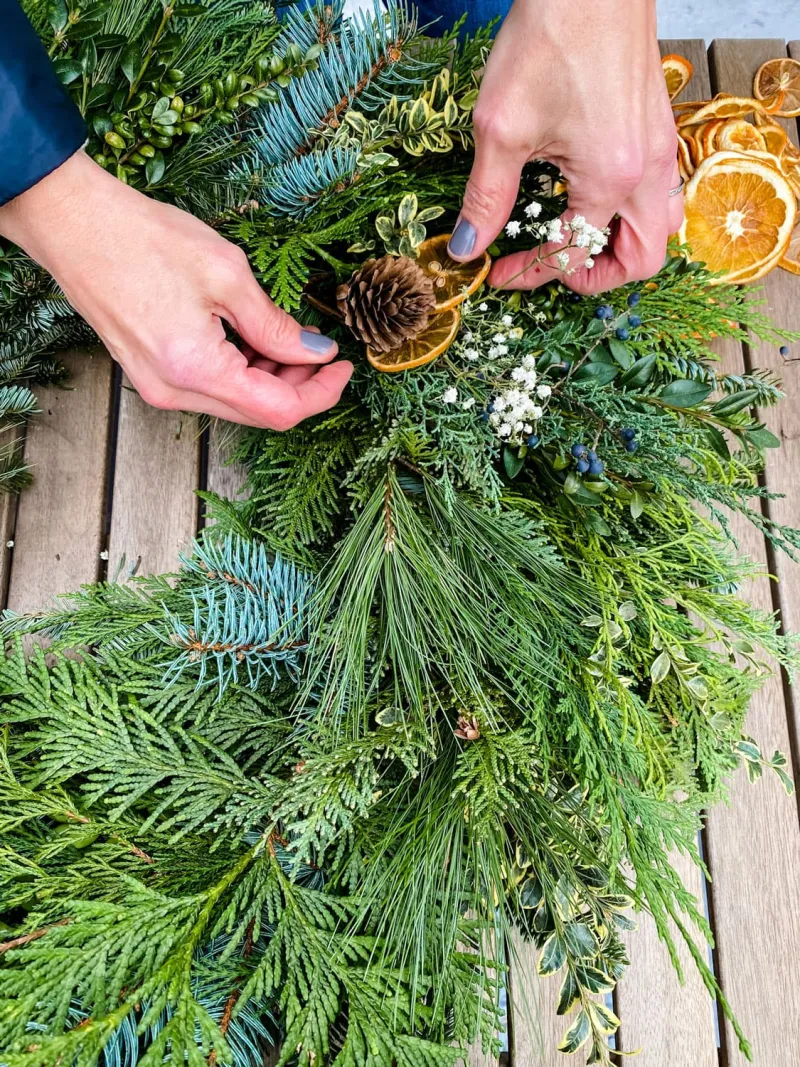
Holly. Homespun and free from the garden. Soak cut stems overnight and wear gloves — the prickles mean business. Mistake: using it as pure filler when variegated holly can be the star.
Paperwhites. Force bulbs in November and you have scented flowers by Christmas. Mistake: keeping them somewhere too warm so they stretch and flop — stake them early.
Eucalyptus. Not native, we know, but it conditions beautifully and dries like a dream. Mistake: hiding the silvery foliage behind big blooms.
Ivy. The hedgerow's structural gift. Wash it well (aphids), strip the lower leaves, and use it to line wreaths. Mistake: using ivy with berries indoors if you've got small children or pets about.
Winter-flowering viburnum. Fragrant, frost-proof and forgiving. Condition in warm water to encourage the buds to open. Mistake: cutting it too early and getting nothing but bare twigs.
Work through the seasons, keep a notebook of what conditioned well and what didn't, and by next winter you'll have the twenty-stem vocabulary every arranger needs. The rest is just practice — and there are worse things to practise than flowers.