What's Free, Seasonal, and Probably Growing Down Your Lane? A Forager's Guide to British Blooms
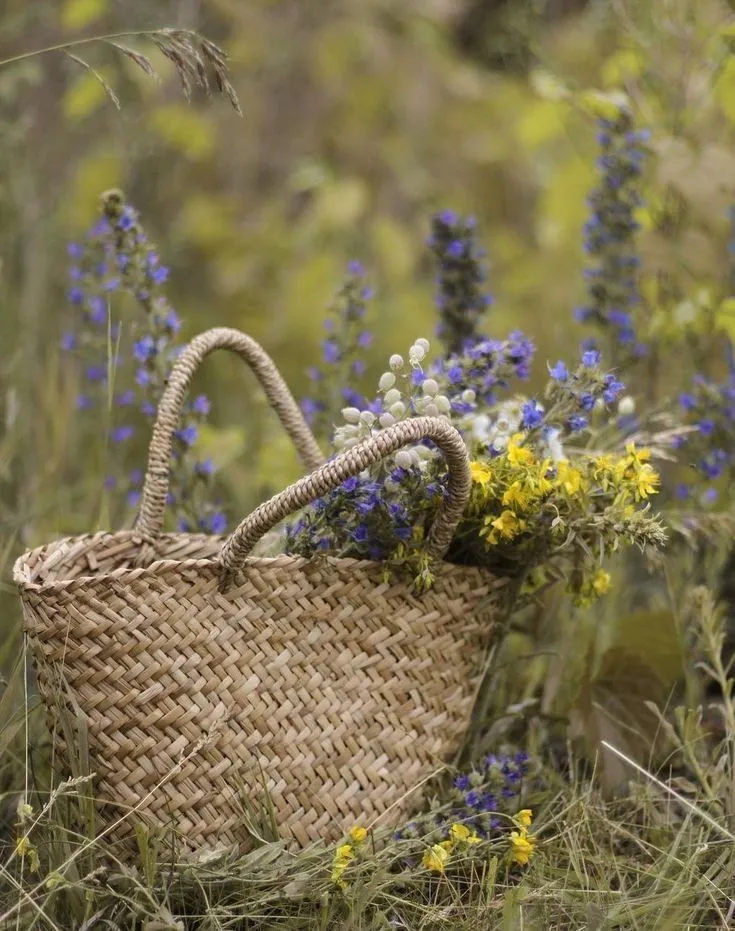
Photo: wildflower foraging basket hedgerow British countryside, via i.pinimg.com
There's a particular thrill to walking back from a country lane with an armful of cow parsley, your kitchen table about to become a studio. Foraging for arranging material is one of the oldest traditions in British floristry — and, done properly, one of the most sustainable. Here's everything we cover in our foraging workshops, distilled for your own two hands.
Know Before You Pick: The Legal Bit
Let's get the serious stuff out of the way first. Under the Theft Act 1968, picking wild flowers, foliage, fruit and fungi for personal use is legal in England and Wales — provided you're doing it casually, not for sale or reward, and you have no commercial interest in the plants.
That said, there are firm rules worth committing to memory:
- Never uproot a wild plant. Digging up anything — even on your own land without permission — is illegal under the Wildlife and Countryside Act 1981.
- Protected species are off-limits. Plants like primrose (in some areas), ghost orchid, and certain orchids and ferns are fully protected. If you're unsure, leave it be.
- Ask permission on private land. Most farmers will happily say yes to a polite request, and you might gain access to the best hedgerows in the parish.
- Avoid Sites of Special Scientific Interest (SSSIs) and nature reserves unless specifically permitted.
- The forager's code: take no more than you need, and never strip a plant or patch bare. The aim is to leave the hedgerow looking as though you were never there.
Your Month-by-Month Foraging Calendar
One of the joys of British foraging is that there's rarely a month with nothing to offer. Here's how the year unfolds:
January–February: Bare and bracing, but not barren. Look for hazel branches with catkins, trailing ivy, evergreen foliage like holly, box and conifer, and the first snowdrops (only ever pick from your own garden or with explicit permission — they're protected in the wild).
March–April: Blossom season begins. Blackthorn, cherry plum and crab apple offer clouds of delicate white and pink. Wild garlic (ramsons) brings scent and glossy foliage, while the first cow parsley starts to unfurl at the verges.
May–June: The hedgerow's high season. Cow parsley, foxgloves (handle with gloves — they're toxic), red campion, grasses and elderflower all peak. Garden roses begin in earnest, and sweet pea sowings from early spring start to give you the first pickings.
July–August: The abundance months. Wildflowers, yarrow, meadowsweet, verbena bonariensis gone feral at the roadside, and hedgerow berries beginning to blush. Garden dahlias and sweet peas are at their most generous.
September–October: Seed heads take centre stage — honesty, poppy, allium, teasel. Rosehips, haws and sloes add jewel tones, and the last of the dahlias and chrysanthemums soldier on.
November–December: Time for wreath materials. Pine, spruce, ivy, eucalyptus (from gardens), rosehip sprays, and anything architectural — birch branches, dried grasses, the skeletal beauty of fennel heads.
From Lane to Table: Making It Look Professional
The difference between a bunch of foraged stems and an arrangement that looks like it came out of a studio comes down to three things: preparation, proportion and structure.
Condition everything. Cut stems at an angle with sharp secateurs, strip any foliage that would sit below the waterline, and plunge them straight into deep, cool water. Let everything have a good, long drink — ideally several hours in a cool, dark spot — before you arrange. Woody stems like blossom benefit from a split cut or a light cross-cut at the base to help them take up water.
Think in thirds. A professional arrangement usually follows a loose rule: one third greenery and structure, one third statement blooms, one third filler and movement. Foraged material excels at the first and last of these — a few arching grasses or a spray of cow parsley can lift a humble bunch of garden roses into something genuinely lovely.
Build a framework, not a bunch. In our workshops, we teach the chicken wire method — a loose ball of garden wire mesh tucked into a wide-mouthed vessel, which holds stems exactly where you want them. It's reusable, invisible in the finished piece, and a far kinder choice than floral foam, which is single-use plastic and doesn't biodegrade.
Vary the height and angle. The commonest beginner mistake is arranging everything at the same level. Let some stems reach out sideways, let others sit low and snug. Wild material is naturally irregular — lean into that rather than fighting it.
A Few Forager's Cautions
- Identify before you arrange. Some of our loveliest wild plants — foxglove, hemlock water-dropwort, lords-and-ladies — are toxic. Wear gloves, wash your hands, and keep arrangements away from children, pets and anywhere food is prepared.
- Watch for wildlife. Nesting birds are protected from February to August; never cut into a hedge where birds might be nesting.
- Rotate your spots. Revisit the same hedgerow weekly and it will show. Give patches time to recover.
Ready to Try It?
Start small: one walk, one bucket, one arrangement on your kitchen table. Bring along anything you've foraged to one of our seasonal workshops and we'll help you turn it into something you're genuinely proud of — no foam, no imports, no fuss. The British hedgerow has been doing this for centuries; it's only polite to let it teach you a thing or two.