Sow in April, Sing in December: A Year of Growing Your Own Dried Flowers
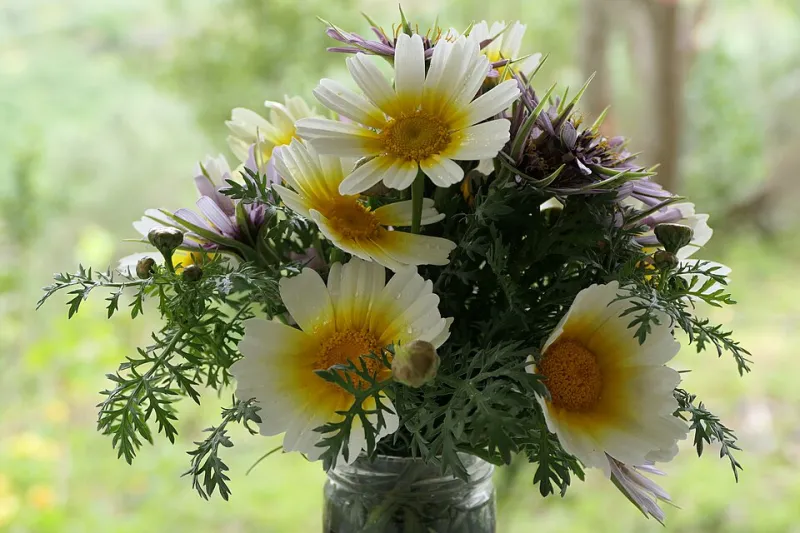
Photo: Adam Jones from Kelowna, BC, Canada, CC BY-SA 2.0, via Wikimedia Commons
Back in April, full of the sort of optimism that only a sunny bank holiday weekend can produce, we sowed a whole bed of everlastings at the school. The deal we made with ourselves was simple: no buying dried flowers in December. Whatever we wanted for our winter wreaths and mantelpiece arrangements had to come from that one patch of roughly four metres by two behind the polytunnel.
Nine months on, the results are in — and honestly, it's been a bit of a rollercoaster. If you've ever fancied a vase of home-grown dried blooms come the darkest weeks of the year, here's what we learned, month by month.
April: The Easy Bit
Everlastings are forgiving to start. We sowed strawflower (Helichrysum bracteatum), honesty (Lunaria annua), nigella, and a mix of grasses — bunny tails, quaking grass and the odd clump of miscanthus borrowed from a neighbour. Everything went into modules first, because our soil is heavy clay and slugs are, shall we say, enthusiastic.
Germination was quick and unremarkable. Strawflower in about a week, nigella within a fortnight. The honesty took its time but caught up. If you're doing this at home, sow under cover in March or April and you'll be laughing.
June: The First Panic
By early summer the bed looked, frankly, scruffy. Nigella is a bit of a wanderer — it flopped over the path and got tangled with the grasses. The strawflowers stood tall and unbothered, as they tend to. We nearly pulled it all out and started again with something tidier. Don't. The mess is part of the deal, and by July it all knits together into something quite lovely.
July and August: Cutting Time
Here's the crucial bit nobody tells you: with everlastings, timing is everything. You're not cutting for the vase — you're cutting for the drying rack, and that means catching each stem at exactly the right moment.
- Strawflower: cut when the outer petals have just opened but the centre is still tight. Too late and the petals curl back on themselves in a most unattractive way.
- Nigella: wait until the seedheads have swollen and turned that gorgeous ruddy bronze, but before they split. Miss the window by a week and you'll have a bed of exploded papery lanterns.
- Honesty: you want the seed pods once they've lost their green but before they're fully dry on the plant — then peel the outer husks to reveal the silver moons.
- Grasses: cut just as the seedheads emerge, while they're still faintly green at the base.
We hung everything upside down in bundles in the lean-to — dark, dry, with decent airflow. Rubber bands rather than string, because the stems shrink as they dry and you don't want them slipping out.
September and October: The Waiting Game
Two weeks for the grasses, three for the strawflowers, a good month for the honesty pods. The smell of a drying room in September is something else — papery, hay-like, faintly sweet.
The nigella was the star. Crisp, architectural, that lovely matte bronze that looks expensive in a way no shop-bought stem ever manages. The bunny tails dried to a soft fawn and were being stolen by students for buttonholes before we'd even counted them.
November: The Casualties
Not everything made it. The miscanthus, cut too late, had gone brittle and snapped at the slightest touch. A bundle of strawflowers we'd hung too close together went mouldy at the heads — a real heartbreaker, and entirely our fault for cramming them in. Airflow, people. Airflow.
December: The Payoff
And then, on a grey Sunday in early December, we made the arrangement. Strawflowers in burnt orange and deep red, silver honesty moons, a cloud of nigella and bunny tails, all gathered from one bed we'd sown ourselves. It cost nothing but a few packets of seed and a bit of patience, and it will look like this until February at least.
There's something quietly triumphant about it. A supermarket bouquet gives you four days; this gives you a whole winter, and the memory of a muddy April morning sowing it.
Your Timeline, In Short
- March–April: sow under cover
- May: plant out after the last frost
- July–August: cut and hang, in batches, at the right stage
- September–October: dry fully, store in a dark, dry place
- November–December: arrange, wreath, gift, repeat
Start with strawflower and nigella if you only try two things — they're practically foolproof and endlessly useful. The honesty is worth it for the silver alone. And leave a bit of room in your diary come August, because the cutting window waits for no one.